The steps outside the screen
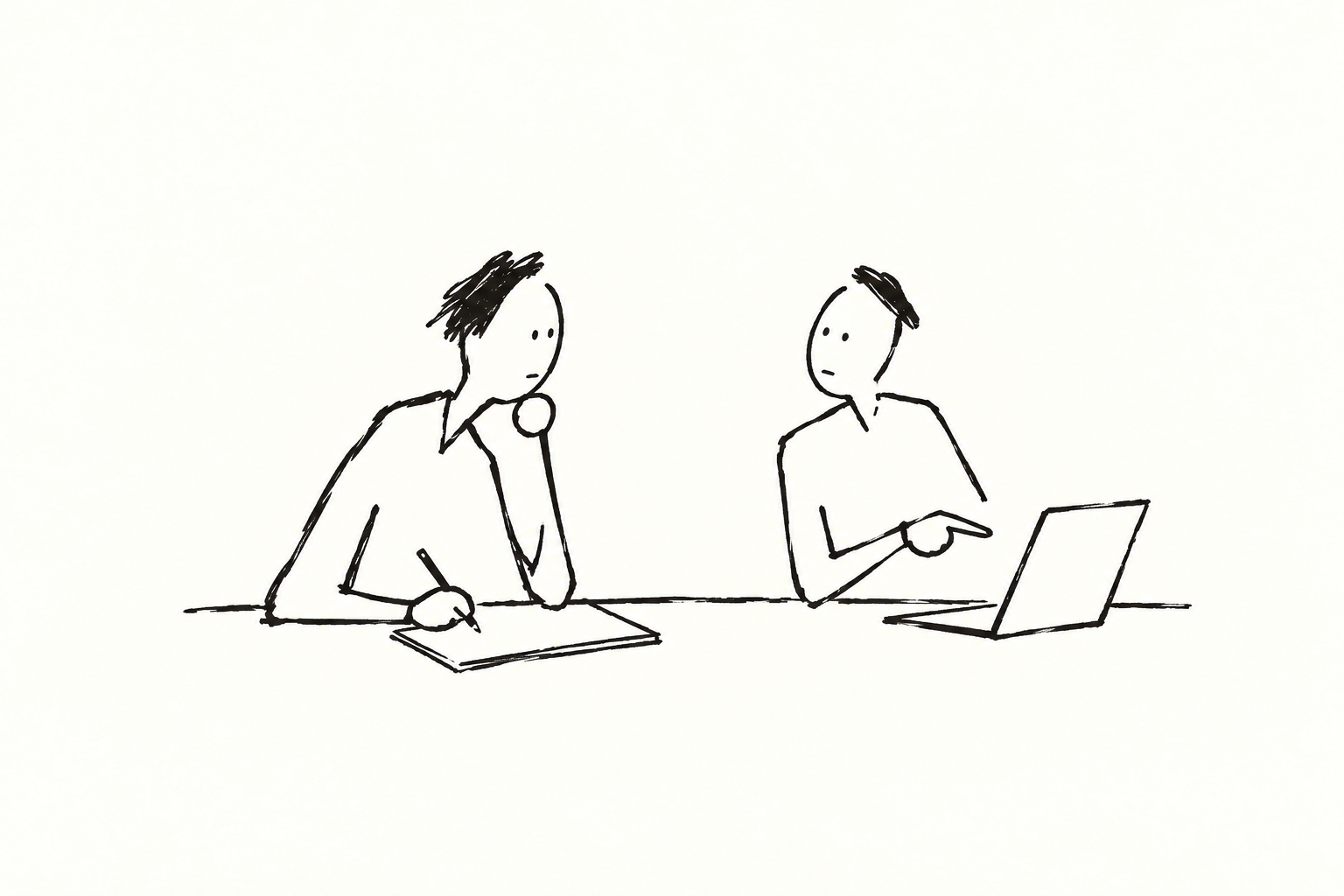
The user’s finger stopped on the mouse.
There was a button on the screen to move forward. He did not press it. He looked down at a sheet of paper beside him, then opened another screen. The engineer noted the sequence.
“What did you just check?”
“Whether it was all right to go ahead.”
The answer did not make it clear yet. What told him it was all right? Was the information on the screen enough? Rather than move on in his notes, the engineer asked to see the same step again.
Introduce AI into a system an information-systems department has used for years. The job could be described in a single sentence. At the desk, there were many things that did not fit inside it.
The user moved through the screens with practiced ease. He knew where the necessary information lived. He did not normally explain why he switched between screens. To him, it was all one continuous piece of work.
The engineer had come from competitive sport. Even then, he had sometimes believed he was doing what he had been told, only to find he was not. There is a distance between hearing an explanation and reproducing the movement yourself. He was measuring that distance at this desk too.
This time he retraced the sequence himself. Partway through, he hesitated. One arrow was missing from his notes.
Examine what should stay
When he moved a sheet toward the edge of the desk, pressure marks remained on the paper underneath. He drew a new diagram there.
What the user wants to do. What the current system can do. Place an AI assistant between them.
It was easy to draw. One line, and everything looked connected.
He opened the screens again and checked the existing functions one by one. Which information could already be retrieved? Which steps had brought it to its current state? Were there similar-looking operations that meant different things?
A long-used system accumulates the practical demands of work. Its appearance alone cannot explain them. Asked why, the user thought for a moment and demonstrated another operation. The engineer erased a line he had begun to draw.
“It looks as though we can use the existing function there.”
The user pulled his chair a little closer.
“Are you going to build the same thing again?”
“First, I want to check what is already here.”
To build the assistant’s entry point, he needed to understand the work behind it. He spent longer examining existing functions than sketching new screens. The margins in his notebook grew smaller. He turned the page.
Draw the line at delegation
There was now a working prototype.
Enter something, and a response came back. At his own desk, he had made it through the process once. He ran the same sequence in front of the user.
The user watched the screen. His hand stopped in the same place as it had during the first demonstration.
“I want to look at this myself.”
The engineer took his hands off the keyboard.
“What would you need to see to make that decision?”
The user reopened the screen he had just closed and pointed to the information he used. It was missing from the AI’s response. Something resembling an answer had appeared. To determine whether it could be used, he still had to return to the original screen.
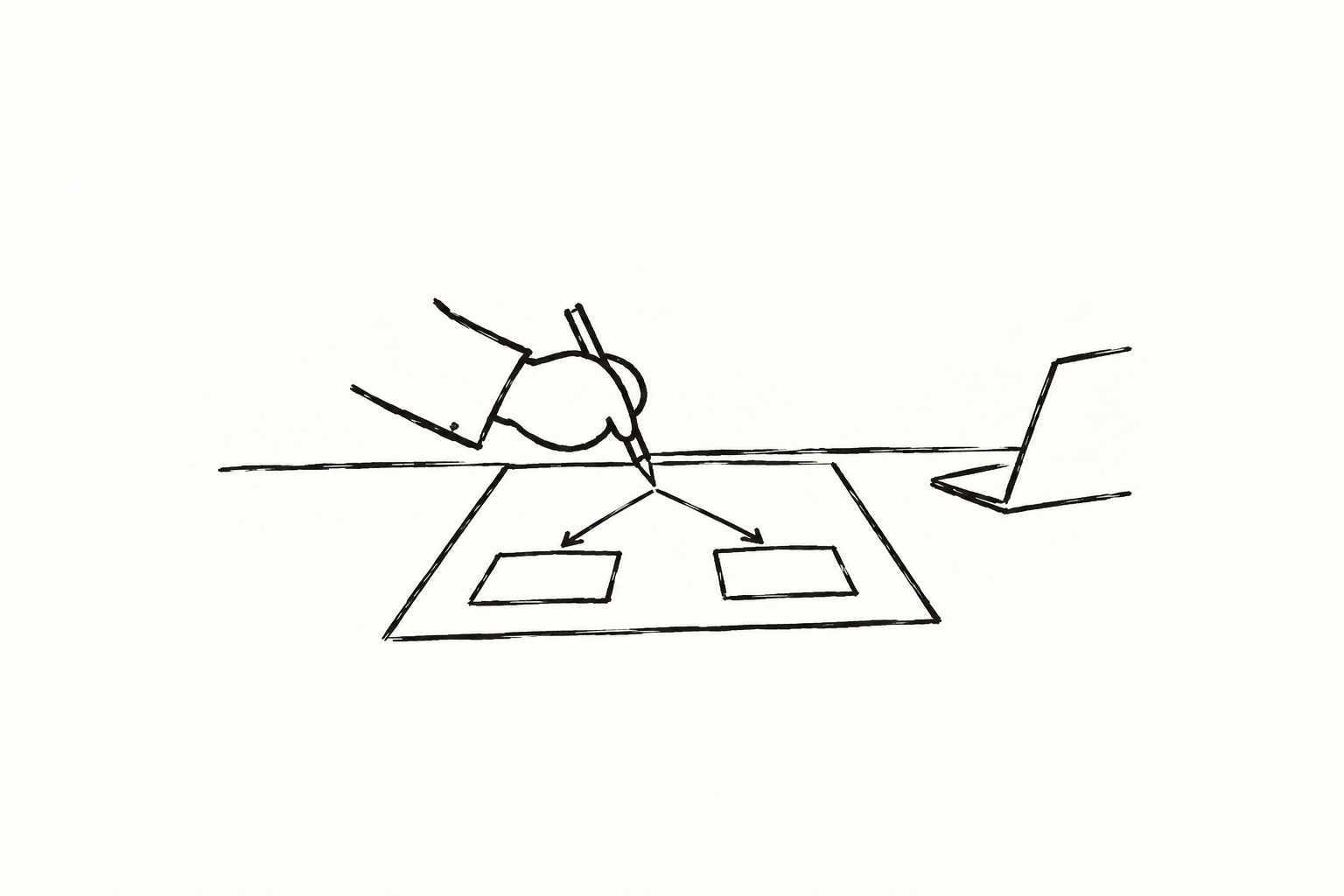
The engineer copied the prototype’s flow onto paper, separating the operations delegated to AI from the points a person would check. He marked a spot on the line he had connected automatically from beginning to end.
If someone pauses to check, what should they be able to see there? If they defer the decision, where should they be able to return? There were more questions to ask. As the prototype began working, its shortcomings became more concrete.
The process behind the screen finished. The user had not pressed anything yet.
The engineer waited.
Bring the revision back
Back at his desk, he revised the prototype.
Simply adding the words he had heard to the screen was not enough. Changing which information appeared first changed what came afterward. He checked the existing functions again, looking back and forth between the paper diagram and the screen, reconnecting the flow one line at a time.
In sport, a corrected movement sometimes felt more awkward immediately afterward. Old patterns in the body interfered with new ones. Reverting at that point would take him back to the same place. Choose what to check, and try again. He settled back into his chair.
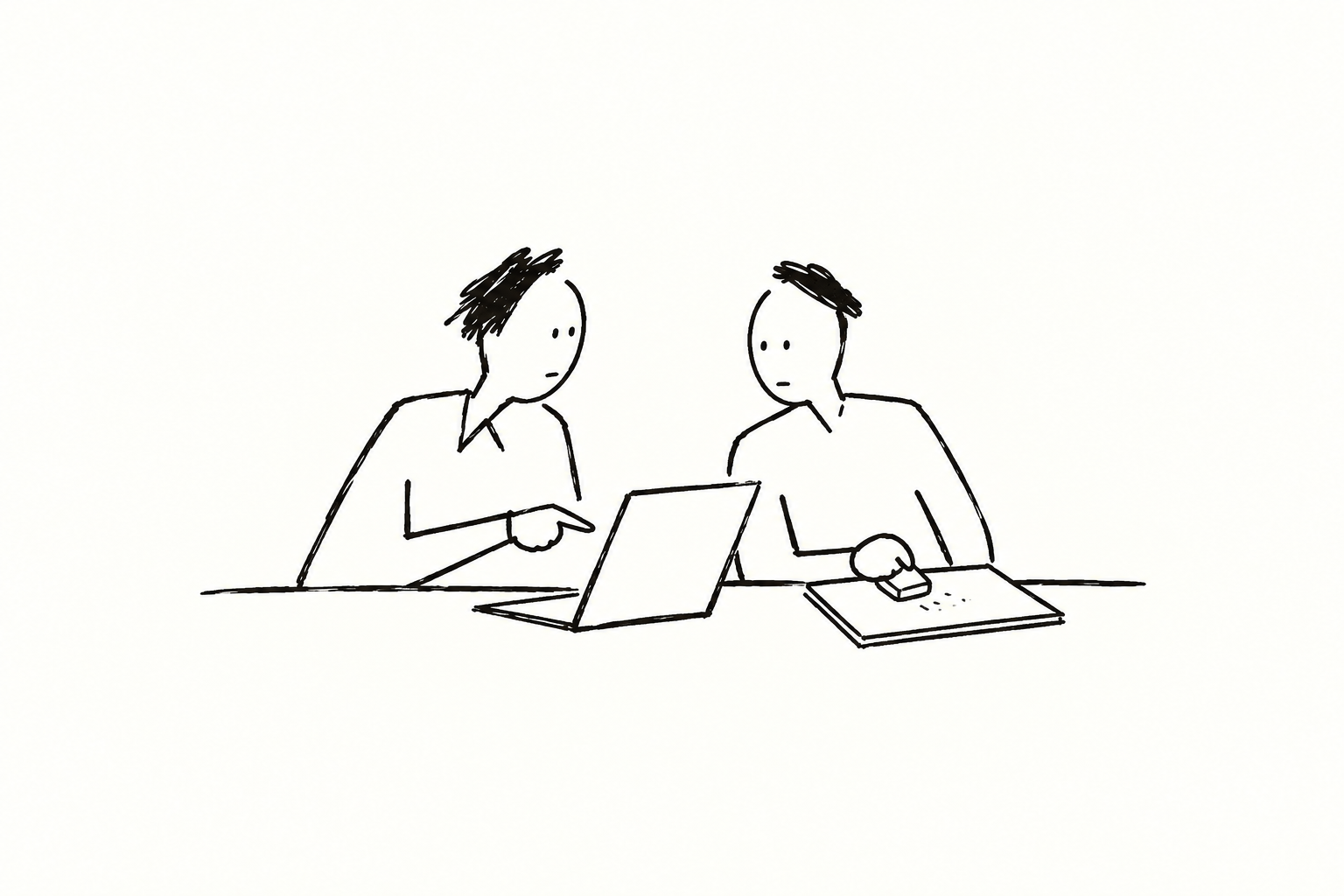
At the next demonstration, he tried not to explain too much at the start. He let the user operate the system and watched where his eyes moved. Whenever he felt the urge to interrupt, he wrote a note instead.
The user pointed at the screen.
“It would help to know this earlier.”
The engineer started to nod, then stopped.
“At which point do you mean by earlier?”
The user returned to the previous screen. The engineer turned back a page in his notebook. Something he thought he had heard was still unresolved.
The first diagram lay on the desk. Erased lines remained faintly visible, with new lines crossing over them. Neither the existing system nor the user’s work could be moved around as easily as a diagram. Find what can change, build it, and bring it back here.
He drew a small circle around the next place to revise.
Before he could close his notebook, the user pointed at the screen once more.
New intelligence for a system people rely on.
Shaping an AI assistant by understanding the work and making use of existing assets.
An essay starting from Case 03, tracing the movement between conversation and implementation.